
MUST is born: Italy’s first Museum of Natural History. Watch the video!
Italy’s first Museum of Natural History is being set up at the University of Parma: MUST.
A museum that is accessible to all, with special attention to those with sensory and mobility difficulties, and which aims to be a great natural history tale along the timeline. Work is ongoing and the opening is scheduled for June 2025.
On Tuesday 12 November, in the Aula Magna of the University, the presentation of the project was held, with speeches by the Rector Paolo Martelli, the Delegate for Museum Activities Donato Antonio Grasso, the Head of the Area for Relations with Society Riccardo Marini, the Scientific Director of MUST Davide Persico, the expert in exhibition valorisation Maria Amarante and Sandrino Luigi Marra, in charge of the MUST’s soft decolonisation process. Deputy Pro-rector Fabrizio Storti also spoke at the meeting.
Thanks to a PNRR grant from the Ministry of Culture, a process of complete renovation and rethinking of the University’s Natural History Museum has begun: at the end of this process, the MUST will be created.
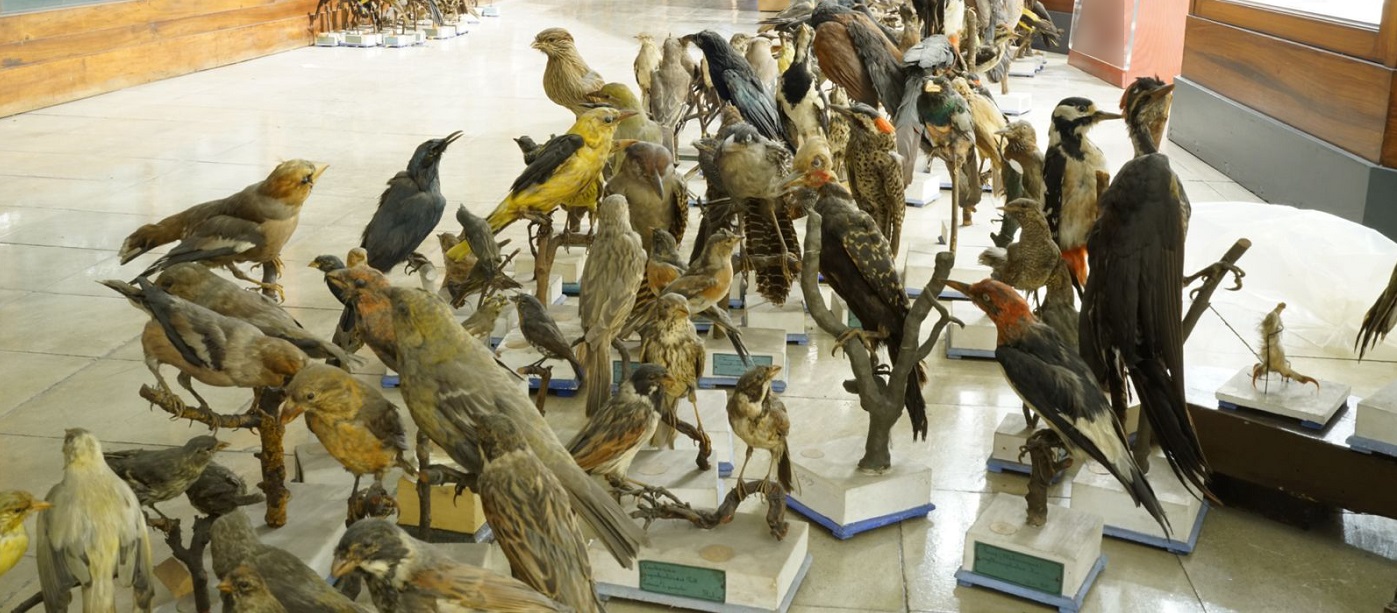
In the Museum of Natural History, located in the University’s main building since the end of the 18th century, the accessibility of the museum’s holdings was limited by the spatial dispersion of the collections and laboratories over several buildings and several vertical levels, which particularly penalised visitors with mobility impairments. The new project will make it possible to create a museum organised to be accessible to all and sundry, with collections also set up to disseminate the principles of biodiversity, environmental protection and cultural exchange The project is also intended to be a driving force for the museum collections to intersect with debates on sustainability and the role of the scientific community in relation to society.
The collections will be integrated in a single location in the University’s main building, breaking down motor, cognitive and sensory barriers to allow all audiences to visit independently, and also enhancing educational activities. The intervention consists of the creation of an independent, barrier-free access route on two levels: ground floor and first floor. On the ground floor, a layout will be created along the perimeter corridor, where materials representative of the collections previously decentralised in various locations will be relocated. On the first floor, a single entrance will be created, also signalled by a tactile footpath, with stairs and a lift suitable for motor and sensory disabled people. Sensory and cognitive accessibility to the collections will be improved by using new display cases of a height suitable for children and wheelchair users, thus enhancing the quality of the visitor experience for the entire public. Digital explanatory aids will be used.
In MUST, the idea was to describe Natural History through a historiographical chronological path, represented by the personalities who founded and contributed to the growth and evolution of the Museum. From Father Fourcault, who will welcome visitors by recounting the time when he started a small collection of natural history exhibits in 1768, to Duchess Maria Luigia of Austria, who between 1816 and 1847 did her utmost to increase the collections and who will tell visitors about her love of the natural world: what enabled the original nucleus to be enriched with important exhibits, considered extremely rare and fascinating at the time, such as an ostrich specimen, a kangaroo, a narwhal tooth, birds of paradise and the precious San Donnino meteorite (Fidenza, 1808). Other guides of the museum will be other of its ‘fathers’: from Pellegrino Strobel to Alberto Del Prato and Angelo Andres.
At the opening of the tour, there will be a re-enactment of the wunderkammer, an exhibition hall ‘of wonders’ whose purpose was to stimulate the amazement of those who crossed its threshold: artefacts and objects of all kinds, heterogeneous and spectacular, will occupy all the surfaces of the hall, the inside of the cupboards and the barrel ceiling, just as happened in the Scholars’ Palaces from the 16th century onwards. And in closing there will be a new, modern wunderkammer: a cubic room that will welcome visitors in an astonishing immersive vision of a thousand colours, in the splendid collection of butterflies and beetles that belonged to Don Boarini and was acquired by the Museum in the 1990s.
There will be a section of human anatomy, with a room dedicated to the work of anatomist Lorenzo Tenchini and his wax masks made on commission by Cesare Lombroso, a room of comparative anatomy, an ethnographic section, and much more, in a tour that promises to be truly a journey of wonders.
The layout will be totally revolutionised compared to the Natural History Museum, and will be aimed at enhancing the heritage in a totally immersive approach.


