




5. Comparative anatomy
The Skeleton Collection and the Human Anatomy Collection

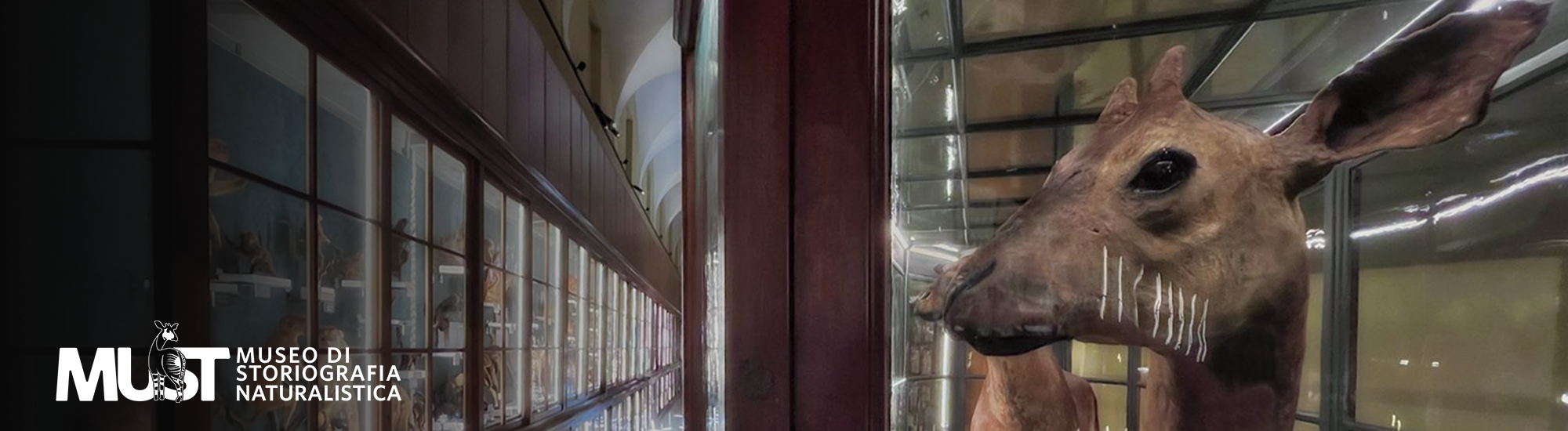
This section, originally created by Angelo Andres, has been enriched over time with skeletons and individual bone parts, transforming it into a veritable comparative anatomy room.
The specimens are arranged according to a bilateral symmetry pattern, reminiscent of Haeckel’s comparative tables: birds, reptiles, amphibians and fish are displayed alongside large mammals.
Grouped by class and, within each class, divided by species, the skeletons are arranged in such a way as to highlight their similarities and, at the same time, their morphological differences.
The same section also displays a large collection of human anatomical specimens and wax models illustrating the ontogenetic development of organs.
Overall, the comparative anatomy room combines a traditional exhibition layout with a modern evolutionary concept, creating an environment that integrates zoological systematics with the phylogenetic derivations highlighted by homologies.

